‘This Isn’t China’: Kampung & Co Store Sparks Language Debate in Kuala Lumpur
Kampung & Co Opening Draws Unexpected Backlash
What was meant to be a positive announcement quickly turned into a heated public debate after Housing and Local Government Minister Nga Kor Ming shared news about the opening of a new retail outlet called Kampung & Co in Kuala Lumpur.
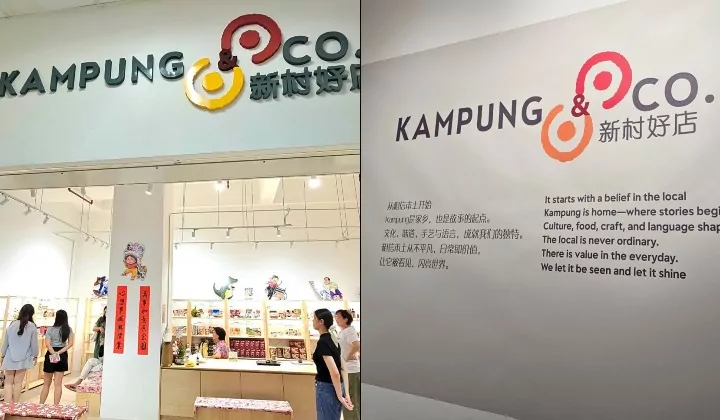
The store, which recently opened at GMBB in Bukit Bintang, is part of a government-supported initiative under the “One Village, One Product” policy. Its aim is to promote goods produced by local communities, including those from Malaysia’s so-called “new villages”.
Nga described the launch as “another piece of good news,” highlighting that the outlet sells quality products made by local villagers. However, public reaction online quickly shifted focus away from the products themselves.
Why Is Chinese Text So Prominent On A ‘Kampung’ Brand?
The controversy erupted over the store’s name and branding. While the word “Kampung” is Malay, the store also features large Chinese characters (新村好店), which many netizens felt overshadowed the national language.
“This isn’t China. Prioritise Bahasa Melayu,” one user wrote, echoing a sentiment that gained traction across social media.
Others questioned whether the use of Chinese text on a brand carrying a Malay identity was appropriate at all, with comments suggesting cultural appropriation or imbalance in representation.
Some critics also accused the initiative of sidelining ethnic Malay businesses, asking why a government-backed project using a Malay concept appeared to lean heavily towards one community’s language.
‘New Village’ History Adds Another Layer Of Sensitivity
The debate intensified when netizens brought up the historical meaning behind the term “new village”. During the Malayan Emergency in the 1950s, British colonial authorities created new villages to separate Chinese communities from communist insurgents.
For some Malaysians, that historical context made the branding even more politically and culturally loaded, especially when paired with a Malay word like “Kampung”.
“This isn’t just about a shop sign. Words carry history,” one commenter noted, pointing out that language choices in public spaces are never neutral in Malaysia.
Not Everyone Is Opposed To The Idea
Despite the backlash, the initiative also found defenders. Supporters argued that Kampung & Co reflects Malaysia’s multicultural reality and could help attract tourists interested in local crafts, food, and heritage from various communities.
Others highlighted the store’s mission statement, which emphasises belief in local culture, storytelling, and diversity, arguing that language inclusion should not automatically be seen as erasing national identity.
Language, Identity And Power In Malaysia
The Kampung & Co debate once again exposes how deeply sensitive language and identity remain in Malaysia. In a country where ethnic groups coexist but often operate in different linguistic spaces, even well-intentioned initiatives can become flashpoints.
At its core, the controversy raises uncomfortable but necessary questions:
Who gets to define “local”?
Which language represents national identity?
And how should government-backed projects balance inclusivity with constitutional priorities?
DISCLAIMER: NasiLemakDaily is not responsible for any comments written by readers. Please think carefully before posting. We are also unable to monitor every comment posted. All comments are your own responsibility.