They Planned For 37,000 Fans. Sepang Got Nearly 100,000 And The Shuttle System Collapsed
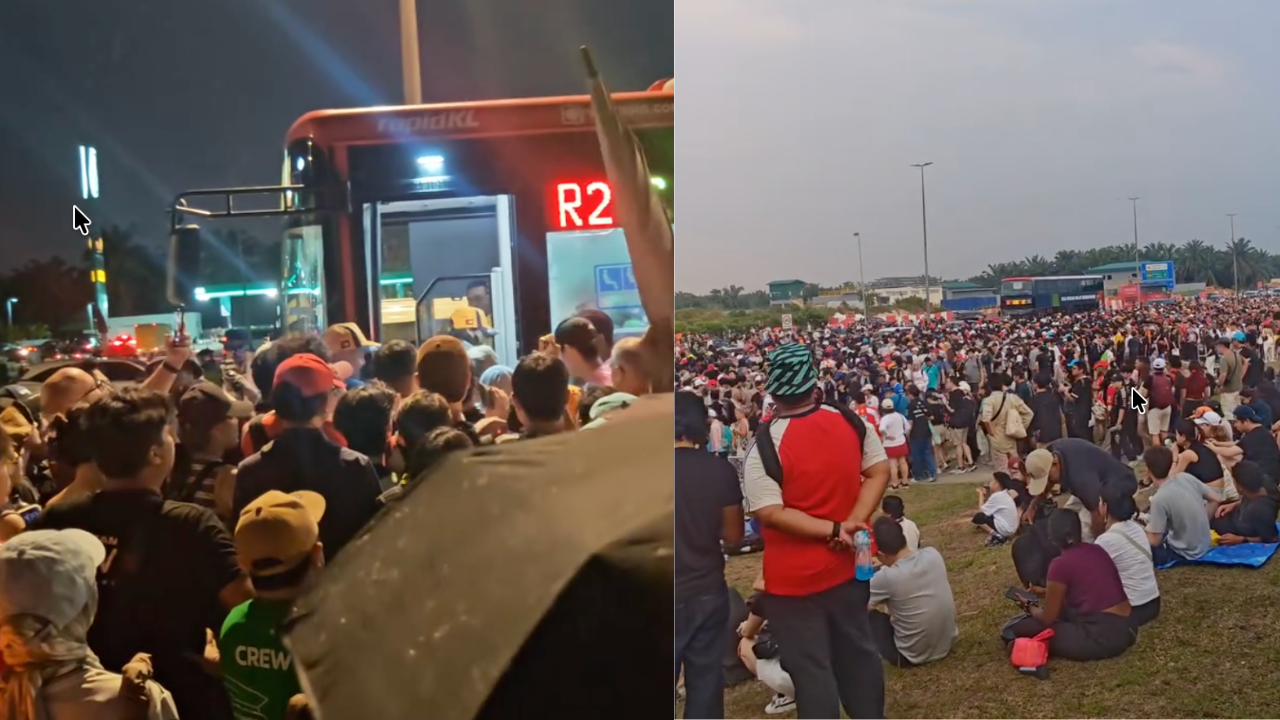
Thousands of F1 fans faced waits of up to four hours while leaving Sepang International Circuit on 2 October after shuttle services struggled with the huge crowd. The Rakyat Post reported that 95 shuttle buses had been planned around an expected attendance closer to Bahrain’s usual peak of 37,000, while Sepang drew an estimated 100,000 spectators.
The Problem Wasn’t Just Too Few Buses, The Crowd Was Far Bigger Than Planned
The numbers explain why Friday evening went wrong so quickly. According to The Rakyat Post, Bahrain International Circuit normally handles a single-day peak of around 37,000 spectators, but an estimated 100,000 people turned up at Sepang on the opening day of the relocated Bahrain Grand Prix. The event’s shuttle operation consisted of 95 buses, which had earlier been announced to run every 10 to 15 minutes from several transport hubs. The report states that Bahrain International Circuit, as event promoter, had operational control over transport logistics and that the shuttle fleet was sized around the crowd it had planned for rather than the much larger turnout that actually arrived. Sepang International Circuit, meanwhile, said transport operations were under the Bahrain promoter’s jurisdiction. That distinction matters because this was not simply Malaysia bringing back its old Grand Prix operation after nine years. Sepang was hosting a relocated Bahrain Grand Prix, and the scale of the Malaysian turnout appears to have caught the transport plan badly off guard.
By Evening, Some Fans Decided Walking Several Kilometres Was Better Than Waiting
Once Friday’s sessions ended, the problem became impossible to miss. The Rakyat Post reported waits stretching to four hours, with some spectators only managing to board a shuttle after 9pm. Buses meant to arrive every 10 to 15 minutes were themselves caught in heavy traffic, while crowds built up around transport areas serving Mitsui Outlet Park and the KLIA Long Term Car Park. Eventually, thousands reportedly gave up waiting and started walking. Videos shared online showed streams of F1 fans moving along road shoulders in the dark, with some journeys estimated between 4.8km and 8km. E-hailing vehicles and private cars were restricted from approaching the circuit gates, meaning spectators first had to reach outer pickup areas before they could get another ride. The scenes became so chaotic that Malaysians online started comparing them to Train to Busan. It was obviously a joke, but it captured just how strange the situation had become: people had paid to watch some of the fastest cars in the world, then ended their night walking kilometres just to get away from the circuit.
Saturday Proved The Situation Could Improve Once The Scale Was Taken Seriously
The transport nightmare did not continue at exactly the same level throughout the weekend. By Saturday, dedicated transit lanes were introduced and crowd management was tightened, while KLIA Ekspres extended services until 1am and increased train frequency to every 15 to 20 minutes. The Rakyat Post reported that conditions subsequently improved significantly. That makes Friday’s chaos even more important to examine because the issue was not that Sepang was fundamentally incapable of moving large crowds. The circuit continues to host major events, including MotoGP, and the report noted that SIC said it does so without comparable incidents. The bigger lesson from the Bahrain GP appears to be about planning for the audience Malaysia can actually attract. Nearly 100,000 tickets had already been sold before the race weekend, setting a new ticket-sales record for Sepang, so this was never going to feel like an ordinary 37,000-person event. If Formula 1 ever makes a more permanent return to Malaysia, Friday’s scenes should probably be remembered for one simple reason: getting 100,000 people excited enough to come to Sepang is one challenge, but getting them home efficiently is another.
Key Facts
What happened: Thousands of spectators faced severe congestion and long waits for shuttle buses after Friday’s F1 sessions.
Where: Sepang International Circuit, Selangor.
When: 2 October 2026.
Estimated crowd: Around 100,000 spectators on the opening day, according to The Rakyat Post.
Reported planning benchmark: Bahrain International Circuit typically handles a single-day peak of around 37,000 spectators.
Shuttle fleet: 95 buses.
How long did some fans wait? Up to four hours.
What happened next: Some spectators walked between 4.8km and 8km towards external transport points, while authorities introduced additional traffic and transport measures for Saturday.
.
HotNews : Cristiano Ronaldo & Georgina Rodriguez Are Finally Married After Nearly 10 Years Together
Trending : Retired Teacher Ordered To Pay RM88,000 After Slapping 14-Year-Old Student Four Times
_________________________________________________________________________
Sources
Primary source: Threads
Event: Gulf Air Bahrain Grand Prix 2026 in Malaysia
Location: Sepang International Circuit, Selangor
Incident date: 2 October 2026
Reported opening-day attendance: Approximately 100,000 spectators
Reported shuttle fleet: 95 buses
Additional transport information: The Rakyat Post’s pre-event transport guide.
DISCLAIMER: NasiLemakDaily is not responsible for any comments written by readers. Please think carefully before posting. We are also unable to monitor every comment posted. All comments are your own responsibility.
Watch Video :
By – Tarziman — 04:49PM
An independent writer who enjoys finding interesting angles in everyday stories. He believes even the simplest moments can be worth sharing when they’re told in a clear, relaxed and easy-to-understand way.