

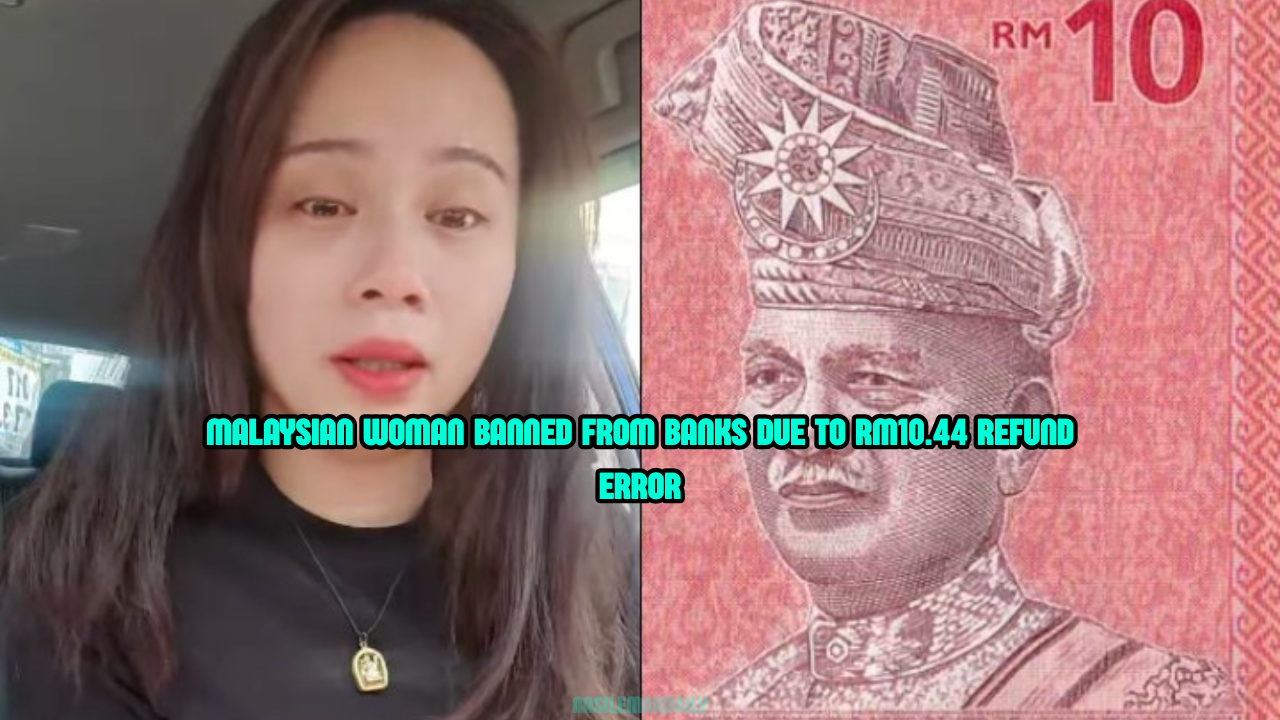
M’sian Woman Says RM10.44 Refund Mistake Got Her Banned from Banks
E-Wallet Error Leads to Financial Ruin for Malaysian Woman
What was meant to be a simple business trip to Thailand turned into a financial nightmare for Michelle Law, a Malaysian woman who claims a RM10.44 refund error from an e-wallet transaction caused her to be blacklisted by banks and denied access to basic financial services.
According to Law, she used her e-wallet in 2024 to enjoy better exchange rates during her overseas trip. However, her account was later frozen over suspected hacking.
Despite submitting the necessary documents as requested, she claims the e-wallet company failed to respond.
Labeled as “Money Mule” Without Proof
Months later, Law says she received calls from two local banks informing her that her accounts would be closed. The reason? She had been labelled a money mule — someone who unknowingly or knowingly helps move illicit funds.
With the label applied, she says she could no longer open new accounts, apply for loans, or even purchase property.
“I have no criminal record, but I’m living like someone who’s been sentenced to prison,” she said in a viral video.
Emotional Toll: Health Impact and Legal Costs
The stress of the situation took a severe toll on her health. Law shared that she developed thyroid issues and insomnia due to the ongoing anxiety. Legal consultations revealed that fighting the case would cost anywhere between RM8,000 and RM60,000.
In April 2025, Law said the e-wallet platform finally acknowledged the mistake: the RM10.44 refund had been accidentally reported as suspicious activity.
While the company allegedly told her the “money mule” label had been lifted, they refused to issue official documentation confirming her innocence.
Public Support After Viral Video
After her emotional video gained traction online, the e-wallet company reached out again, this time promising to resolve the matter properly. Still, Law remains cautious, waiting for formal proof to clear her name from banking watchlists.
She posed a question to the public:
“If this happened to you, being falsely accused with no fault of your own — what would you do?”
How Could This Happen?
Experts note that banks and e-wallets today use artificial intelligence (AI) to track and prevent fraudulent financial activity. However, these systems can sometimes generate false positives, especially for transactions involving cross-border usage.
Malaysia’s financial institutions also share fraud alerts across the banking system, meaning that one report of suspicious activity can have ripple effects, leading to multiple account closures — even if the original flag was an error.
Due to regulatory procedures and compliance obligations, removing these flags from internal systems often involves time-Consuming verification steps — leaving the innocent caught in bureaucratic limbo.
Source: Instagram
https://x.com/fxdhilss/status/1937087086684934415
By Tarziman — 25/06/2025, 02:50 PM


