Ipoh Shuts Down Heritage Street For 1,000-Person Feast That Revived A Dying Tradition
Jalan Bijeh Timah Became Malaysia’s Most Epic Dinner Table
While much of Malaysia was winding down after Chinese New Year, Ipoh decided to turn things up instead.
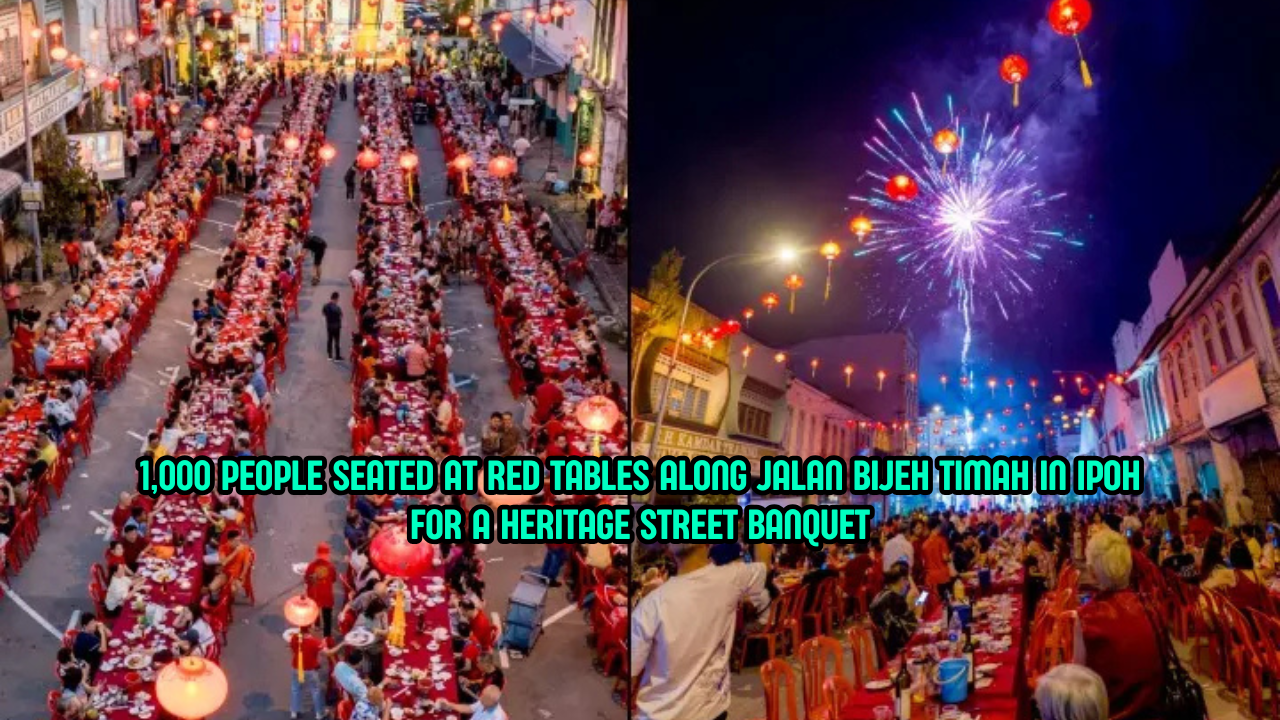
Last Monday, Jalan Bijeh Timah in Ipoh’s Old Town was completely transformed into a massive open-air banquet that stretched down the entire heritage street. What looked like a scene from a festival movie was actually the 8th annual “马喜霸” Grand Feast.
With 136 tables lined neatly down the middle of the historic tin mining road and more than 800 paying diners seated, the total headcount crossed 1,000 once performers and crew were included.
For RM100 per person, guests secured a seat at what may now be Malaysia’s most legendary street celebration.
Reviving The Lost Art Of Liu Shui Xi
The highlight of the night was the revival of “流水席” or liu shui xi, the traditional flowing water banquet once common in old Chinese communities.
Instead of banquet halls and hotel ballrooms, celebrations were held directly on the street. Long rows of tables, neighbours seated side by side, food served in courses, laughter echoing between shop houses.
That spirit returned in full force along Jalan Bijeh Timah.
The red tablecloths stretched across the road, framed by colourful pre-war shophouses that have stood for generations. For one night, the entire street felt alive with shared memory and cultural pride.
Eight Courses With Meaning
This was not just about food, but about heritage.
The eight-course menu represented the various Chinese dialect communities that built Ipoh’s early identity.
The feast began with the iconic prosperity toss where everyone stood with chopsticks raised.
From Fujian pork belly paired with flower buns to Cantonese soy sauce prawns, Hakka salted chicken, Teochew spring rolls and Hainanese coconut fried rice, each dish carried cultural roots.
Dessert featured traditional sweets including peanut sesame dates and a reunion dessert soup. Vegetarian options were also prepared to ensure inclusivity.
This was not fusion cuisine or modern reinterpretation. It was memory served on plates.
Cultural Performances Took Over The Night
If the food impressed, the entertainment turned the night electric.
Dragon and lion dances lit up the street. Indian dance troupes joined in. Traditional horse dance performers moved between tables. Cantonese opera echoed through Old Town.
Guests were treated to guzheng and erhu performances, singing segments, family drumming sessions and a fireworks finale that lit up the Ipoh skyline.
It was not just a dinner. It was a full cultural takeover.
When Heritage Becomes Muhibbah
The name “马喜霸” is a clever play on Malaysia’s Muhibbah spirit, symbolising unity through celebration.
The event was also linked to ‘人日’, the seventh day of Chinese New Year, traditionally known as everyone’s birthday.
What made this year’s edition even more meaningful was the scheduling adjustment due to Ramadan, showing mutual respect across communities.
Organised by Pertubuhan Warisan Bandar Timah Ipoh Perak, the annual feast has survived eight years, including pandemic disruptions, proving it is more than just an event. It has become a cultural institution.
Foreign tourists attended. Overseas Malaysians returned. Young locals who moved to bigger cities came home for the night.
For a few hours, heritage did not feel like something in museums. It felt alive.
DISCLAIMER: NasiLemakDaily is not responsible for any comments written by readers. Please think carefully before posting. We are also unable to monitor every comment posted. All comments are your own responsibility.
Source : Tiktok
Video :